


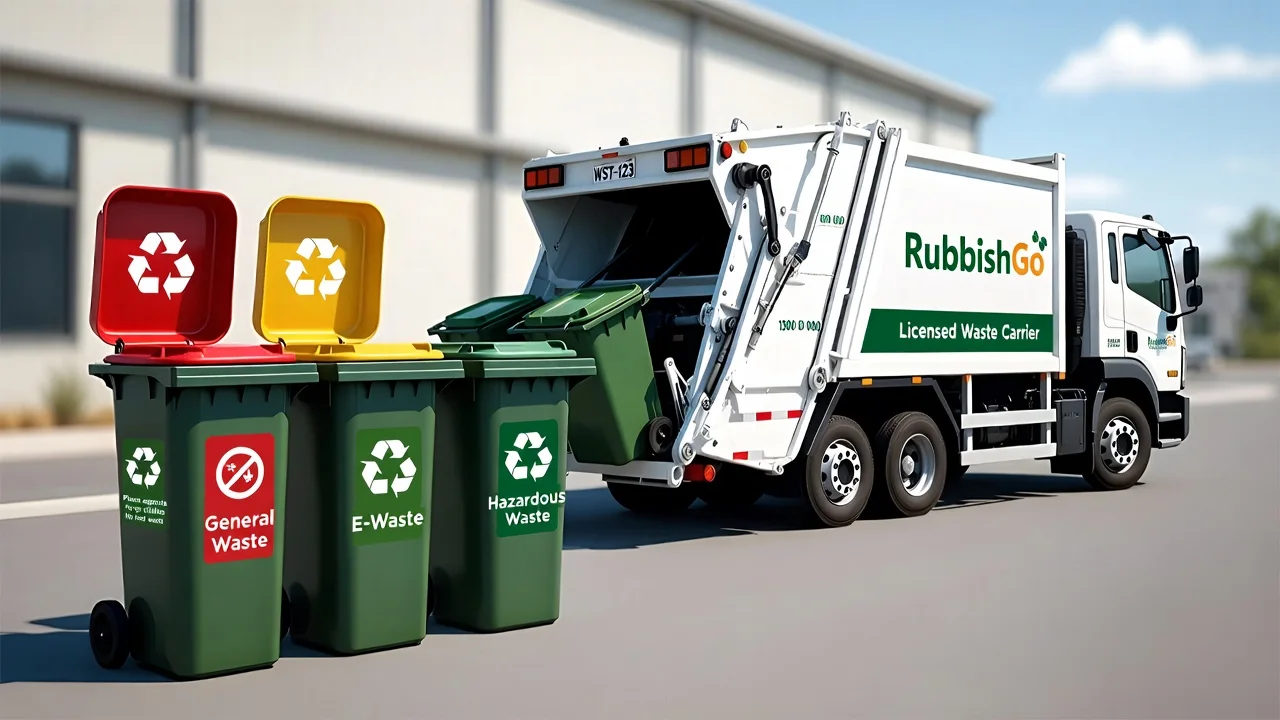
Why EPA Waste Regulations Matter in NSW Right Now
The EPA is under increasing pressure to deliver national targets: halving landfill waste by 2030 and reaching an 80% resource recovery rate. This has led to much stricter monitoring of what ends up in red-lid general waste bins, green organics bins, and yellow recycling bins. Non-compliance is now treated seriously — councils and the EPA regularly issue on-the-spot fines and take court action against repeat offenders. For most households and small businesses, the most frequent issue is accidentally placing regulated waste — including items covered by e waste regulations or hazardous waste management regulations — into the wrong bin.
Waste Classification & Tracking Requirements (EPA Waste Classification Guidelines NSW)
The waste classification NSW guidelines explain exactly how waste is assessed, classified, and tracked. Most everyday household rubbish falls under “general solid waste (non-putrescible)” and does not require special tracking. However, once waste contains any regulated waste materials — such as hazardous substances, electronic waste, asbestos, or certain chemicals — it becomes “tracked waste” or “restricted solid waste”.
Business obligations:
- Any business generating more than 250 kg per year of certain regulated wastes must use the EPA’s online tracking system (EPA WasteLocate).
- All movements of tracked waste must be recorded electronically.
- Transporters and receiving facilities must hold current EPA licences.
- Waste dockets and disposal records must be kept for at least 6 years.
Practical tip: Always ask for a waste docket or certificate of disposal — especially when dealing with items subject to hazardous waste disposal NSW rules.
What Is “Regulated Waste” in NSW?
Regulated waste (also referred to when defining regulated waste) is any material that, because of its physical, chemical, or biological properties, poses a risk to human health or the environment if not handled correctly. The EPA classifies it under the Protection of the Environment Operations Act 1997 and the Waste Classification Guidelines.
Regulated waste includes:
- Hazardous substances (chemicals, batteries, paints, solvents)
- Electronic waste / electrical waste (computers, TVs, fridges, printers, mobile phones)
- Liquid and chemical waste (oils, fuels, acids, coolants)
- Asbestos and contaminated soils
- Clinical and medical waste (sharps, bandages, pharmaceutical waste)
- Certain treated timber
Ordinary household rubbish (food scraps, garden clippings, general packaging) is not considered regulated waste unless it contains one of the above.
Main Categories of Regulated Waste Under EPA Rules
Hazardous Waste: Paints, pesticides, oils, batteries, gas cylinders, and flammable liquids must go to licensed facilities — never household bins (hazardous waste disposal regulations and hazardous waste management regulations apply).
Electronic / Electrical Waste: Computers, TVs, fridges, printers, and mobile phones often contain heavy metals or flame retardants. For safe collection and recycling, see our Electronic Waste Disposal service. For full details, read our Comprehensive Guide to E-Waste Recycling.
Liquid & Chemical Waste: Oils, fuels, acids, alkalis, coolants, and industrial chemicals require special handling — even small amounts fall under hazardous waste disposal regulations NSW.
Asbestos & Contaminated Materials: Only licensed removalists (Class A or B) can handle materials suspected of containing asbestos, such as old roofing sheets or vinyl tiles.
Clinical & Medical Waste: Sharps, bandages, pharmaceutical waste, and pathological material — almost always business-related.
Common Mistakes That Lead to Fines or Rejected Loads
- Putting treated timber, paint tins or batteries into the green organics bin → bin rejected + contamination fee ($200–$500+)
- Dumping e-waste or hazardous items in the red-lid general waste bin → on-the-spot fines ($1,000–$4,000 for individuals)
- Mixing asbestos or contaminated soil with clean fill → major clean-up orders + potential prosecution
- Small businesses assuming “it’s only a few items” → still fully liable under the EPA’s duty of care provisions
What Should You Do If You Have Regulated Waste? (Practical Steps)
- Identify if your waste is regulated waste — check labels, look for asbestos in old items, or consider electronics, paint, oil, or medical material.
- Do NOT put it in household bins — red, green, and yellow bins are not designed for regulated waste.
- Choose the correct disposal path:
- E-waste → licensed collection service or EPA drop-off points
- Hazardous chemicals → Household Chemical CleanOut events
- Asbestos → Class A or B licensed removalist
- Large volumes or business waste → licensed transporter (like RubbishGo)
- Keep records — always request a waste docket or certificate of disposal.
How RubbishGo Helps You Stay Compliant with EPA NSW Regulations
We are fully licensed and insured to handle regulated waste removal, including e-waste, hazardous waste, and construction waste. Our team identifies regulated items on-site, uses correct handling and transport methods, delivers to EPA-approved facilities, and provides waste dockets and disposal certificates when required.
For construction or renovation waste, see our Construction Waste Removal service.
We also help households and businesses understand bin rules and recycling pathways. For practical sorting advice, check our Household Waste guides.
For international best practice on waste regulation and circular economy principles, see the Ellen MacArthur Foundation’s overview.