


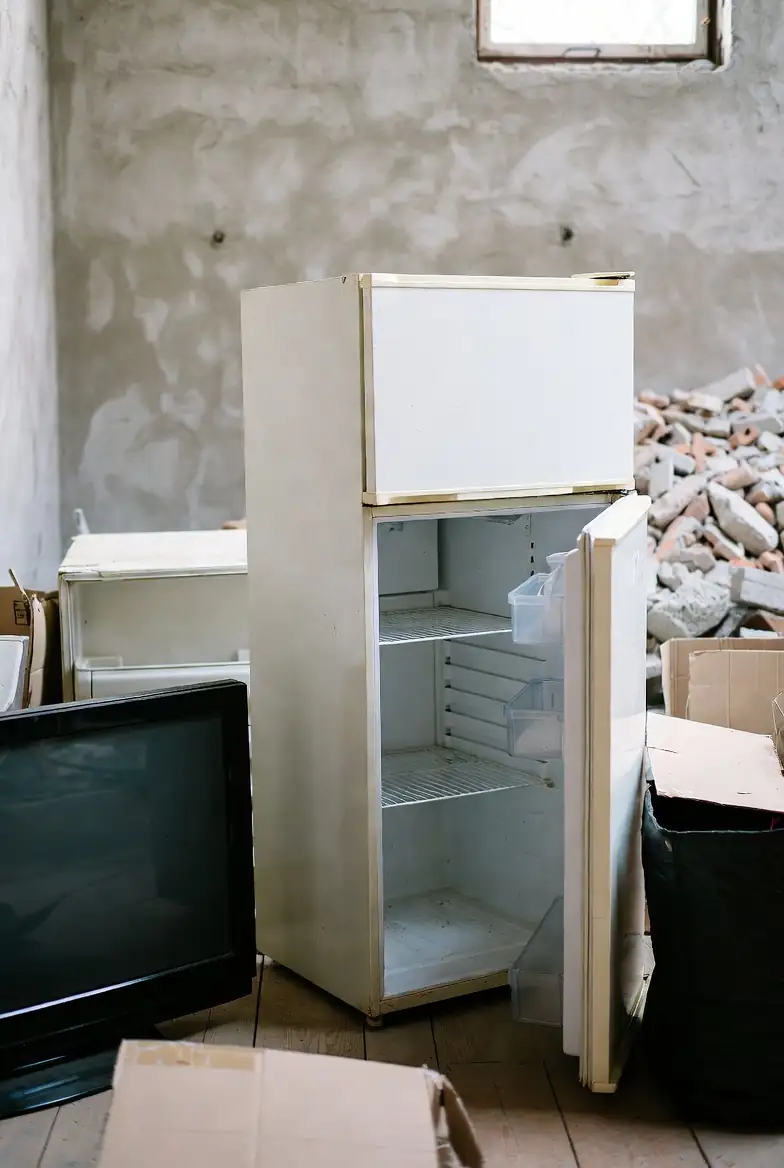
What Are White Goods and Why Proper Disposal Matters
White goods are large household electrical appliances, typically finished in white enamel (though many are now stainless steel or other colours). The most common ones include:
- Refrigerators and freezers
- Washing machines and dryers
- Dishwashers
- Ovens and cooktops
- Air conditioners (split systems and portable units)
These items contain valuable materials (steel, copper, aluminium, plastic) as well as hazardous components (refrigerants, oils, mercury switches, foam insulation). Incorrect disposal can release harmful gases, contaminate soil and water, and waste resources that could be recovered.
Legal & Environmental Rules for White Goods Disposal in NSW
Under NSW environment protection laws and the national product stewardship framework:
- You cannot place white goods in your regular red-lid rubbish bin or mixed recycling bin
- Fridges, freezers, and air conditioners must have refrigerants safely removed by a licensed technician before scrapping
- Illegal dumping or improper disposal can attract on-the-spot fines starting from $1,000–$4,000 (individuals) and much higher penalties for businesses
- Councils and the EPA are increasing inspections of skip bins and hard rubbish collections
Responsible handling is no longer optional — it’s the law.
Learn more about responsible waste management by exploring our comprehensive guides on E-Waste Recycling.
Option 1 – Recycling White Goods Responsibly
Most white goods are 90–95% recyclable when processed correctly.
Where to recycle
- Many NSW councils offer free or low-cost drop-off days for white goods (check your local council website)
- Metal recyclers and scrap yards accept working or non-working units (fridges usually need degassing first)
- Some retailers offer take-back schemes when you buy a new appliance
Does recycling white goods earn you cash? Occasionally, yes — clean steel and copper wiring can have scrap value, but fridges and freezers rarely pay out because of the degassing cost. Most people break even or receive only a small amount. For international best-practice information on appliance recycling, see the Australian Government’s product stewardship page.
Option 2 – Donating Working Appliances to Charity
If the appliance still works well, donating is often the best option.
Which appliances can be donated?
- Fridges, freezers, washing machines, dryers, dishwashers, and ovens (in good, clean, working condition)
- Small appliances (toasters, kettles, microwaves) are sometimes accepted, but less commonly
Popular charities in NSW that accept appliances
- Salvos Stores
- Vinnies
- The Smith Family
- Habitat for Humanity ReStore
- Local community op-shops (call first)
How to arrange appliance donation pick up. Many charities offer free collection if the item is in good condition and located in their service area. Bookings usually require photos and confirmation that the appliance is working.
Option 3 – Professional Appliance Removal & Disposal Services
When donating isn’t possible, and a council drop-off is inconvenient, a professional service is the easiest choice.
When professional removal is best
- Multiple heavy appliances
- No access to a trailer or ute
- Fridges/freezers that need degassing
- Items located upstairs, in tight spaces, or in deceased estates
What to expect: A reliable service will quote upfront, remove the items safely, degas refrigerants if required, and provide disposal dockets.
For fast and reliable white goods removal across the Central Coast, see our white goods removal service. And if you’re looking to clear more than just appliances? Check out our Affordable Furniture Removal service.
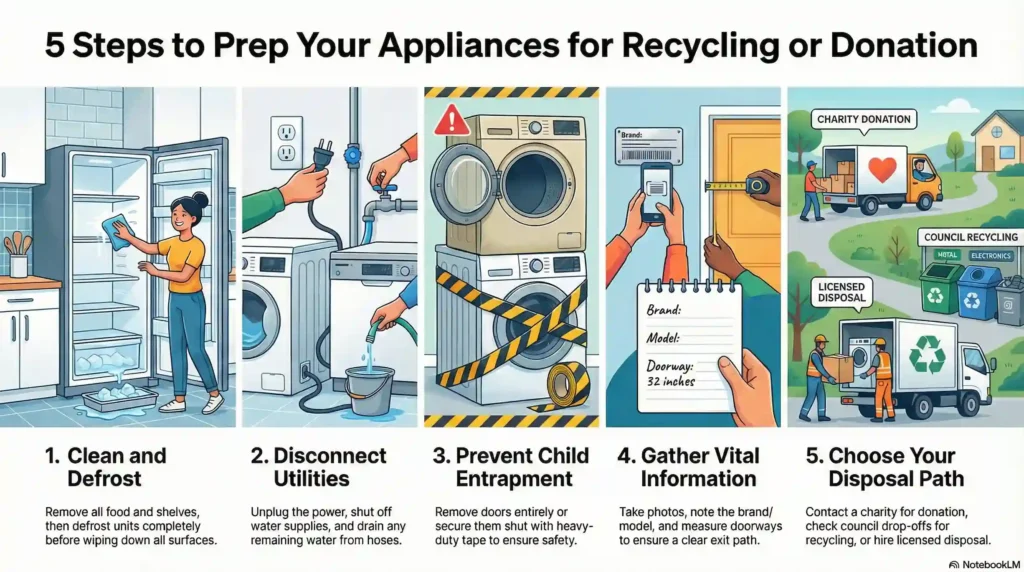
Step-by-Step Guide: How to Prepare White Goods for Recycling or Donation
Follow these steps to make the collection safe and smooth:
- Clean the appliance thoroughly
- Wipe inside and out (especially fridges/freezers)
- Remove all food, shelves, drawers, and ice trays
- Defrost completely if needed
- Empty and disconnect
- Unplug from power
- Turn off water supply (for washing machines/dishwashers)
- Disconnect hoses and drain any remaining water
- Remove doors if required
- For fridges/freezers — remove doors or secure them shut with tape (prevents children from becoming trapped)
- Gather information
- Take photos
- Note model/brand/condition
- Measure access paths (doorways, stairs, gates)
- Choose your method
- Donation → contact the charity and book a pick-up
- Recycling → check council drop-off or book professional removal
- Disposal → Use a licensed service
Common Mistakes to Avoid When Disposing of White Goods in NSW
- Putting fridges/freezers in a skip bin without degassing
- Leaving doors on fridges (child safety risk)
- Assuming all charities take broken appliances (most only take working items)
- Dumping on the nature strip without council approval
- Using unlicensed collectors who may illegally dump
Final Thoughts
In 2026, responsible white goods recycling and old appliance disposal are no longer optional — they’re part of being a good neighbour and a compliant Australian household. Whether you choose to recycle white goods through council drop-off points, arrange appliance donation pick up for working items, or book professional appliance removal and disposal, the key is doing it the right way. You’ll avoid fines, help the environment, and free up valuable space. Don’t let old appliances sit gathering dust — take action today and handle them responsibly.