


Why Reducing Garbage Matters in New South Wales
Many residents ask how can we reduce trash in a meaningful way. The answer starts at home. NSW households produce around 2.5–3 tonnes of waste per year on average, with over 60% still going to landfill. Decreasing waste at the household level directly supports the state’s 2030 targets: 50% less waste to landfill and 80% diversion from household sources. Learning how to decrease waste not only benefits the environment but also reduces costs associated with extra bin services, skip bins, or tip runs. Even small, consistent actions can reduce rubbish dramatically over time.
Everyday Ways to Reduce Trash at Home
If you’re searching for ways to reduce trash at home, begin with the biggest sources first.
Start with the Kitchen – Cut Food Waste First
Food waste makes up roughly 35–40% of household rubbish in NSW. If your goal is to decrease food waste, these habits can cut it nearly in half:
• Plan meals and shop with a list — buy only what you’ll use
• Store produce correctly (e.g., herbs in water, bread in the freezer)
• Use leftovers within 2–3 days or freeze them
• Compost fruit/veg scraps, coffee grounds, and eggshells
For more on turning kitchen scraps into compost, read our article on Compost Magic.
Rethink Shopping Habits – Buy Less, Choose Better
One of the most effective ways to decrease waste is simply buying less and choosing quality over convenience:
• Choose loose fruit & vegetables instead of pre-packaged
• Buy in bulk where possible (nuts, rice, pasta) using your own containers
• Avoid single-serve items — yoghurts, sauces, coffee pods
• Support brands with minimal or recyclable packaging
These small adjustments show how to reduce trash waste without drastically changing your lifestyle.
Switch to Reusables – Replace Single-Use Items
Replacing disposables is central to a practical zero waste lifestyle. Many zero-waste people focus on swapping single-use items for durable alternatives:
• Reusable shopping bags, produce bags, and drink bottles
• Cloth napkins, beeswax wraps instead of cling film
• Stainless steel or glass containers instead of plastic takeaway
• Bamboo toothbrushes, metal razors, washable makeup pads
Adopting these habits is one of the easiest ways to understand how to reduce rubbish at home long-term.
The Zero Waste Basics – Reduce, Reuse, Recycle, Repurpose
The classic hierarchy still works best when aiming to reduce rubbish effectively:
| Priority | Step | Description | Goal / Example |
| 1 | Reduce | Buy less and choose quality over quantity | Avoid unnecessary purchases; opt for durable, long-lasting items instead of cheap, disposable ones |
| 2 | Reuse | Use items multiple times in their original form | Refill bottles, use cloth bags, borrow tools, repair instead of replace |
| 3 | Repurpose | Give items a new function before considering recycling | Turn old jars into storage containers, use timber offcuts for garden edging, convert clothing into rags |
| 4 | Recycle | Process materials for reuse only after the first three steps have been applied | Place paper, glass, plastic, and metal in yellow-lid bins or take to recycling centres |
The classic hierarchy still works best when aiming to reduce rubbish effectively: and work your way down for the biggest impact.
Many people confuse reuse and repurpose. Understanding the difference between recycle and repurpose helps extend the life of materials.
Reuse means keeping the original purpose (e.g., using a takeaway container again for lunch). Repurpose means changing its function (e.g., turning that container into a seed starter). Recycling, on the other hand, breaks materials down to create new products.
Knowing the difference between repurpose and recycle ensures you prioritise keeping items out of landfill for as long as possible.
Common Sources of Household Rubbish – And How to Cut Them
If you’re assessing common waste and how to reduce it, focus on these categories first.
Packaging & Plastic – The Biggest Culprit
Plastic packaging accounts for a large share of red-lid bin waste. Reduce it by:
• Choosing products with paper, cardboard, or glass packaging
• Refusing plastic bags at checkout
• Using the Container Refund Scheme (10c per eligible bottle/can)
Paper, Cardboard & Junk Mail
Opt out of junk mail via the Australian Direct Marketing Association, switch to digital bills, and reuse cardboard boxes for storage before recycling.
Clothing, Textiles & Fast Fashion Waste
Buy second-hand via op-shops, marketplaces, or clothing swaps. Repair items instead of replacing them. Donate clean, usable clothes rather than binning them.
NSW-Specific Rules & Tools That Help Reduce Waste
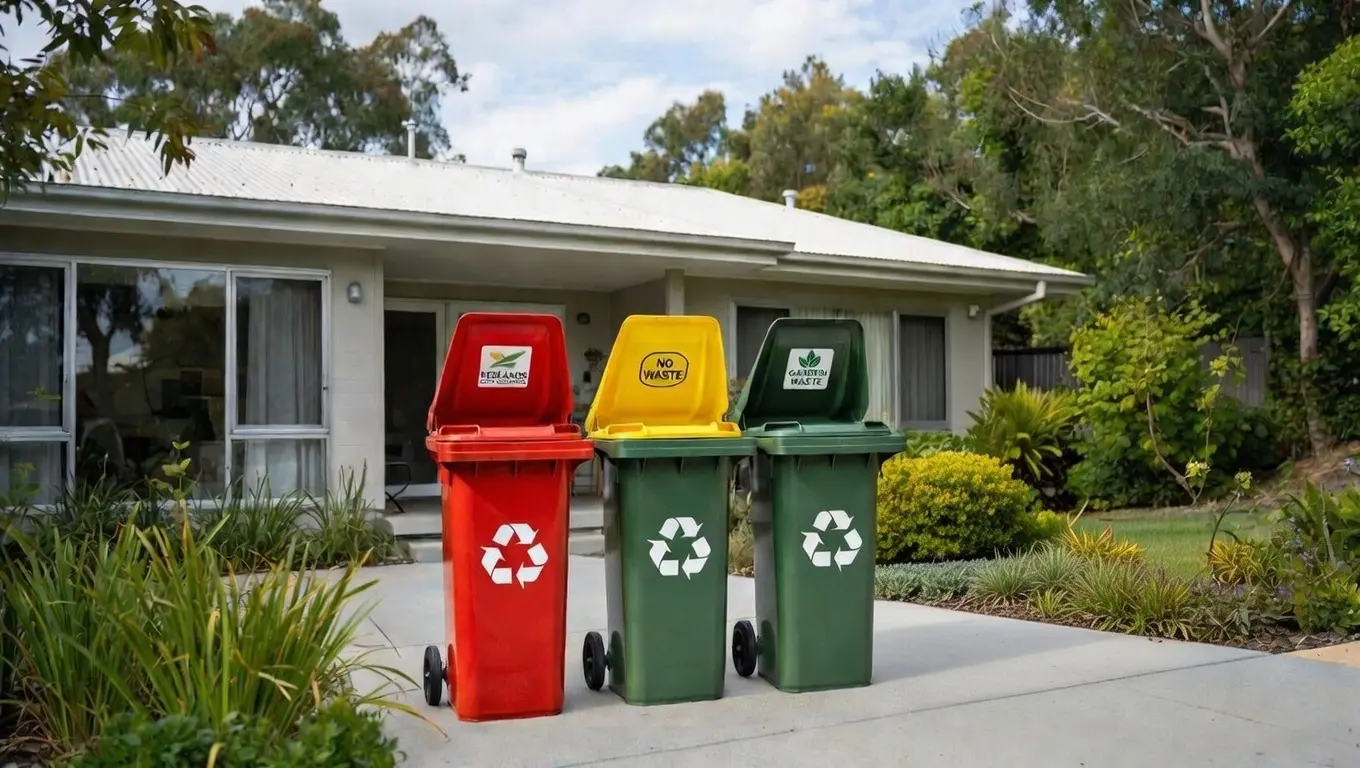
Councils provide yellow-lid recycling, red-lid general waste, and green-lid organics bins. Correct sorting is now more important than ever when learning how to reduce rubbish effectively. For clear guidance on bin rules, see our article on Waste Classification Guidelines.
Many areas offer soft-plastics drop-off points (e.g., REDcycle alternatives) and hard-to-recycle item collections. Check your council website for local hubs.
For more detailed sorting and recycling advice, read our complete guide about Household Waste Sorting & Recycling.
The Ellen MacArthur Foundation’s work on circular economy principles offers an excellent international context for reducing waste long-term.
What to Do with the Waste You Can’t Eliminate
Even when you fully understand how to reduce trash, some waste remains unavoidable.
When items don’t fit bins or aren’t recyclable:
• Use council verge collections for bulky items
• Book a skip bin for renovation waste
• Arrange professional rubbish removal for larger or awkward loads
For fast, same-day service across garages, yards, and homes, see our Full home rubbish removal page.
If you’re deciding between options, our comparison article Skip Bin Hire vs. Rubbish Removal Services explains the differences clearly.
Ready to Start Cutting Your Garbage Today?
Small changes compound quickly. Pick one area — kitchen, shopping, or reusables — and start this week. You’ll see the bin get lighter, your home tidier, and your environmental footprint shrink.
If you reach the point where you still have unavoidable rubbish or bulky items, we’re here to help. Contact RubbishGo for fast, responsible collection across Newcastle, Central Coast, and Lake Macquarie.