


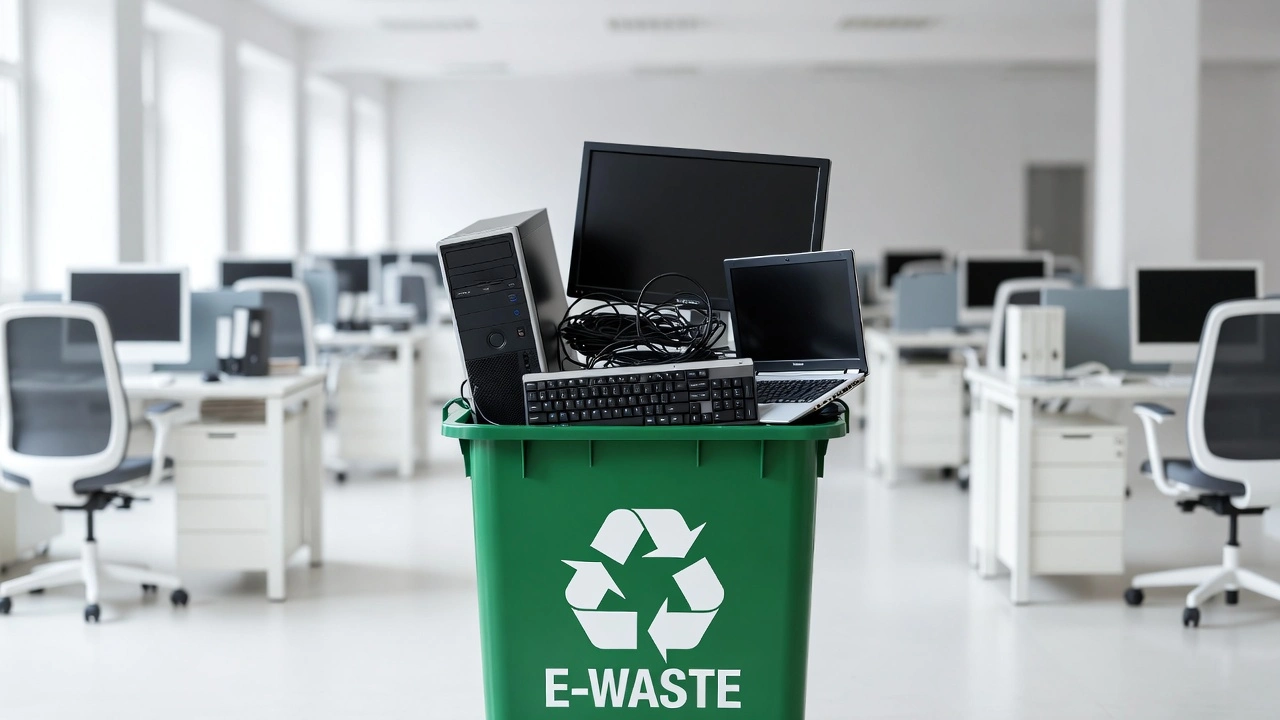
Managing office electronic waste responsibly through proper e-waste recycling is no longer optional — it’s both a legal requirement and a smart business decision. This guide explains what office e-waste is, why it matters, how to handle it correctly, and how RubbishGo can make the process simple, compliant, and environmentally responsible.
What Constitutes E-Waste in the Workplace? Common Office Items
E-waste (electronic waste) includes any discarded electrical or electronic equipment. Understanding how e-waste recycling works helps businesses dispose of electronic items correctly and avoid environmental and compliance risks.
In an office environment, you’ll commonly find:
- Computers, laptops & monitors
- Printers, scanners & photocopiers
- Keyboards, mice & docking stations
- Servers & networking equipment
- Mobile phones, tablets & chargers
- External hard drives & USB sticks
- Shredders & electronic whiteboards
- Fluorescent tubes & old battery-powered devices
Even small items like cables and power boards count as e-waste.
What’s in E-Waste? Understanding the Materials and Environmental Risks
Electronic devices contain a mix of valuable and hazardous materials:
| Material | Common location | Risk / Opportunity |
| Precious metals | Circuit boards | Gold, silver, copper – valuable for recovery |
| Plastics | Casings & cables | Can be recycled if separated |
| Lead & mercury | Older monitors, batteries | Toxic – can contaminate soil & water |
| Brominated flame retardants | Plastics | Harmful to health & environment |
| Lithium & other heavy metals | Batteries | Fire risk & soil/water contamination |
Incorrect disposal sends these substances to landfills, where they can leach into the environment. Proper e-waste recycling recovers valuable materials and prevents pollution.
Australian Regulations for Business E-Waste Recycling and Disposal
Unlike household waste, businesses in most Australian states and territories have a legal duty to ensure e-waste is not sent to landfill. Key regulations include:
- National Television and Computer Recycling Scheme (NTCRS) – covers most computers and TVs
- State-based waste laws – e.g., NSW Environment Protection Act, EPA Victoria requirements
- Work Health and Safety obligations – proper handling to protect staff
- Due diligence requirements – businesses must use licensed waste transporters/recyclers
Failing to comply can result in significant fines.
How to Recycle E-Waste from Your Office Effectively
Follow these practical steps:
- Audit – identify all unwanted electronic items
- Data security – wipe or destroy hard drives (use certified data destruction services)
- Segregate – Segregate – keep e-waste separate from general rubbish to prevent contamination and follow clear waste classification guidelines for correct disposal.
- Choose the right method
- Book a professional collection service
- Drop off at a council e-waste event (limited volume)
- Use a licensed e-waste recycler directly
- Keep records – obtain waste transfer notes or recycling certificates
For offices that prefer a hands-off approach, using a Safe Electronic Waste Disposal for Home & Office ensures electronic waste is collected, recycled, and disposed of safely in line with Australian regulations.
Where Can Businesses Recycle E-Waste? Options in Newcastle, Lake Macquarie & Central Coast
| Option | Best for | Notes |
| RubbishGo professional collection | Medium–large volumes, offices | Same-day options • Data destruction available |
| Local council drop-off events | Small volumes | Usually free but limited dates & volume |
| Designated e-waste recyclers | Very large volumes or specialised | May charge depending on item type |
| Retailer take-back schemes | Individual computers & TVs | Limited to specific brands & products |
For most offices in Newcastle, Lake Macquarie, and the Central Coast, professional services offer the most reliable approach to office trash removal.
E-Waste Bins for Offices: Kerbside and On-Site Solutions
Most councils do not allow e-waste in kerbside recycling bins or general waste bins. Options include:
- Dedicated on-site collection bins – RubbishGo can supply secure e-waste bins for your office
- Scheduled pickups – weekly, fortnightly, or on-call
- One-off clean-outs – ideal for office relocations or end-of-lease situations
Common Mistakes in Office E-Waste Management (and How to Avoid Them)
- Putting e-waste in regular rubbish bins → Avoid: use proper channels
- Throwing away devices with data still on them → Avoid: use certified data destruction
- Mixing e-waste with general recycling → Avoid: keep separate
- Using unlicensed collectors → Avoid: always request EPA licence details
- Leaving old equipment in storage “just in case” → Avoid: schedule regular clean-outs
What Can Businesses Do to Reduce E-Waste in the Workplace?
- Choose products with longer life-cycles
- Implement a “refresh cycle” policy instead of replacing everything at once
- Repair equipment when cost-effective
- Donate working devices to charities or schools
- Buy refurbished or remanufactured products
- Choose manufacturers with strong take-back programs
How RubbishGo Supports Safe Office E-Waste Recycling and Disposal
RubbishGo provides businesses in Newcastle, Lake Macquarie, and the Central Coast with:
- Licensed collection vehicles
- Secure on-site bins when required
- Certified data destruction options
- Full waste tracking & compliance paperwork
- Maximum material recovery through trusted recycling partners
- Same-day and emergency services available
- Transparent, upfront pricing
Ready to Sort Your Office E-Waste? Book a Professional Collection with RubbishGo Today
Don’t let old computers, printers, and other electronics pile up. Contact RubbishGo for a no-obligation quote and use our Office Rubbish Removal service to manage your office e-waste responsibly and in full compliance.