


Why Plastic Recycling Matters in Australia
Every year, large volumes of recyclable plastics still end up in landfills, polluting oceans and harming wildlife. Effective plastics recycling helps reduce landfill pressure, lower emissions, and decrease reliance on virgin plastic.
Learning plastic recycling correctly also supports a circular economy, where materials are reused instead of discarded. For a broader understanding of how plastics fit within household waste streams, see the household waste sorting guide, which explains how proper separation reduces plastic pollution.
Understanding Australia’s Plastic Recycling System
Most Australian homes use a yellow-lid plastic rubbish bin as part of kerbside recycling. However, not all plastics belong there — and incorrect disposal is one of the biggest recycling problems.
For official guidelines on what can and can’t go into your yellow-top recycling bin, the Australian Government’s recycling guidelines provide clear, up-to-date information for households across the country.
✅ Accepted in most councils:
- Plastic bottles and containers labelled #1 (PET)
- #2 (HDPE)
- #5 (PP)
🚫 Not accepted:
- Soft plastics
- Contaminated or bagged recyclables
For detailed rules, refer to the Waste Classification Guidelines, which explain how to correctly separate household waste.
What Are the Types of Plastics and Can They All Be Recycled?
A common question is: What are the types of plastics, and can they all be recycled?
The short answer is no.
Australia uses plastic numbers that are recyclable to identify plastic types. These Resin Identification Codes determine whether an item can go into your plastic bottle disposal stream or needs specialist handling.
Here’s a quick guide:
| Code | Plastic Type | Common Items | Recyclable in Australia? |
| #1 | PET (Polyethylene Terephthalate) | Water & soft drink bottles | ✅ Widely recyclable |
| #2 | HDPE (High-Density Polyethylene) | Milk bottles, shampoo containers | ✅ Widely recyclable |
| #3 | PVC (Polyvinyl Chloride) | Pipes, some packaging | ❌ Not kerbside recyclable |
| #4 | LDPE (Low-Density Polyethylene) | Soft plastics, cling wrap | ♻️ Recycled separately |
| #5 | PP (Polypropylene) | Yogurt tubs, bottle caps | ✅ Increasingly recyclable |
| #6 | PS (Polystyrene) | Foam cups, trays | ❌ Difficult to recycle |
| #7 | Other | Mixed materials | ❌ Usually not recyclable |
If you’re wondering what number plastics can be recycled in Australia, #1, #2, and #5 are your safest choices.
Recycling Plastic Bottles and Polyethene Plastics
Recycling plastic bottles is one of the most impactful ways Australians can reduce waste. PET and HDPE bottles are forms of polyethene, and knowing how to recycle polyethene correctly ensures better recycling outcomes.
To recycle plastic bottles properly:
- Empty and rinse containers
- Remove lids if required by your council
- Place loose items into your plastic waste bin
- Never bag recyclables
Following these steps produces high-quality plastic bottle recycled materials that can be reused in new packaging, furniture, or pipes.
For insights on recycling other materials alongside plastics, including Recycled Paper, see our guide on what can be recycled and how it works.
Soft Plastic Recycling: What You Need to Know
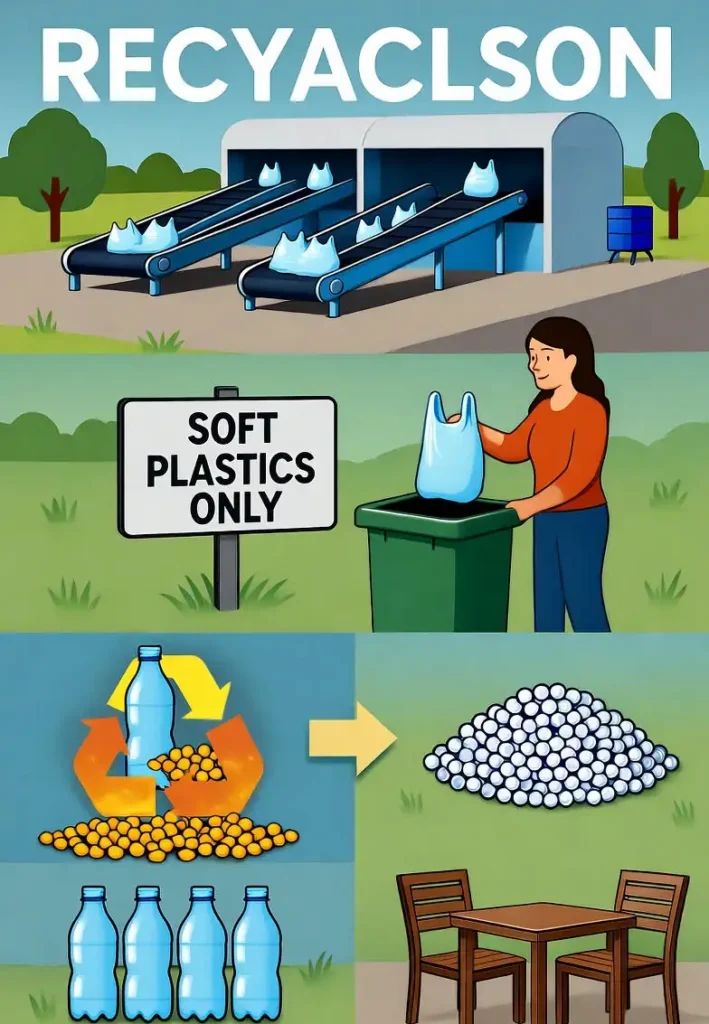
Soft plastic recycling works differently from standard kerbside collection. Items like bread bags, snack wrappers, and shopping bags can tangle or damage machinery if placed in a plastic rubbish bin. If you can scrunch it into a ball, it’s considered soft plastic.
Common examples include:
- Bread bags
- Food wrappers
- Frozen food packets
Kerbside recycling of soft plastics isn’t accepted, but specialised programs exist. Searching for soft plastics recycling near me helps you find local drop-off points as initiatives restart across Australia.
For guidance on disposing of other household organic materials, including what can go into a green waste bin, check our NSW guide.
The Plastic Recycling Process
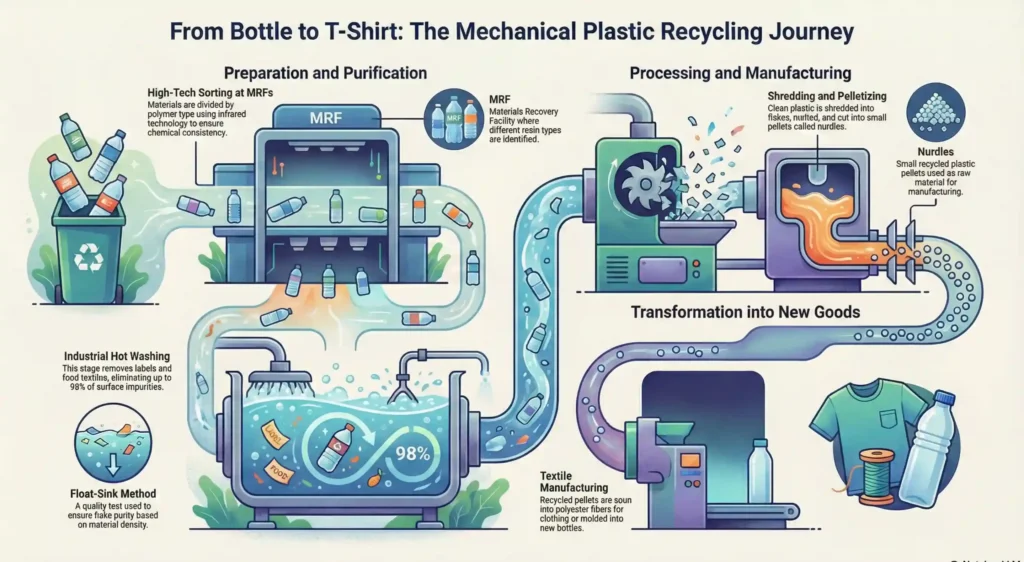
- Collection: Plastic waste is collected from households, businesses, and public recycling bins as the first step of the mechanical recycling process.
- Sorting: The collected materials are transported to a sorting facility, where plastics are separated by polymer type, such as PET, HDPE, and PP. Advanced sorting systems, including optical scanners, help identify and separate different plastic resins.
- Washing: Plastics are thoroughly washed to remove food residue, dirt, adhesives, and labels. This step is essential to reduce contamination and improve the quality of the recycled material.
- Shredding: Clean plastics are shredded into small, uniform flakes, making them easier to process and prepare for the next stage.
- Quality Testing: The flakes are tested for purity, density, and consistency to ensure they meet recycling standards before being processed further.
- Extrusion and Pelletising: The plastic flakes are melted and pushed through an extruder to form strands, which are then cut into small pellets. These pellets are the base material used in recycling.
- Manufacturing: The recycled plastic pellets are supplied to manufacturers and used to create new products such as packaging, furniture, textiles, and construction materials.
Take Action – Make Plastic Recycling Work for Everyone
Plastic recycling in Australia is a shared responsibility. When you rinse, sort, and dispose of plastics correctly, you’re helping reduce waste, protect wildlife, and build a more sustainable future.
If you’re unsure about local rules, check your council website or talk to a waste collection service like RubbishGo — we help households and businesses handle recyclable plastics responsibly.
Every bottle, bag, and container you recycle makes a real difference.