



What Is Scrap Metal?
Scrap metal refers to discarded or leftover metal materials from homes, renovations, demolition sites, vehicles, and industrial operations. It includes both reusable and recyclable metals, commonly grouped into two categories:
1. Ferrous Scrap Metals (contain iron)
- Structural steel
- Car bodies
- Whitegoods
- Steel framing and beams
Ferrous metals make up the largest volume of scrap metals in Australia, though they generally have a lower 1kg scrap metal price compared to non-ferrous metals.
2. Non-Ferrous Scrap Metals (no iron content)
- Copper (wiring, pipes)
- Aluminium (window frames, cans, gutters)
- Brass (fittings, taps)
- Stainless steel
- Lead (regulated handling required)
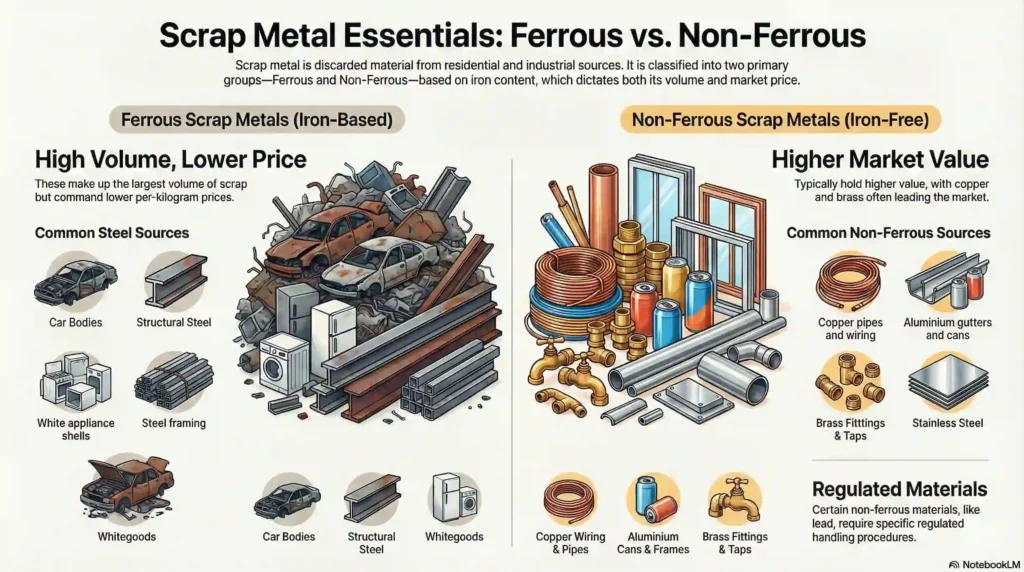
Non-ferrous metals typically hold higher scrap metal value, with scrap metal and copper prices often leading the market.
Why Scrap Metal Recycling Matters
Recycling scrap metal:
- Reduces the need for virgin mining
- Cuts greenhouse gas emissions
- Saves up to 95% of the energy required to produce new aluminium
- Supports Australia’s circular economy
According to the World Steel Association, steel is the most recycled material globally, with significant production derived from scrap and metal recovery streams.
In Australia, metal scrap plays a major role in construction, manufacturing, and infrastructure supply chains.
Current Scrap Metal Prices in Australia
Scrap metal rates fluctuate daily based on global commodity markets, demand, and metal purity. While there is no fixed current scrap metal prices chart Australia-wide, typical NSW price ranges are:
| Metal Type | Approximate Price Per kg (AUD) |
| Clean Copper | $10 – $13 |
| Brass | $6 – $9 |
| Aluminium | $1.50 – $2.70 |
| Stainless Steel | $1 – $3 |
| Light Steel | $0.10 – $0.30 |
The cost of scrap metal and the money for scrap metal you receive depend on:
- Cleanliness (no rubber, plastic, contamination)
- Volume supplied
- Separation by type
- Market timing
Higher-grade, sorted metal scrap generally attracts a stronger scrap metal value.
How to Get Paid for Your Scrap Metal
Turning metal scrap into money is straightforward:
- Sort and clean your materials (remove plastic, rubber, or dirt).
- Weigh roughly to estimate value using the current price of scrap metal.
- Choose a reputable buyer like RubbishGo for fair scrap metal pricing and instant payment.
- Larger loads often qualify for better rates or free scrap metal pick up.
Many customers earn hundreds from a single clean-out, especially with high-value items like copper. We pay competitive rates and handle everything from metal scrap removal to recycling.
How Scrap Metal Recycling Works
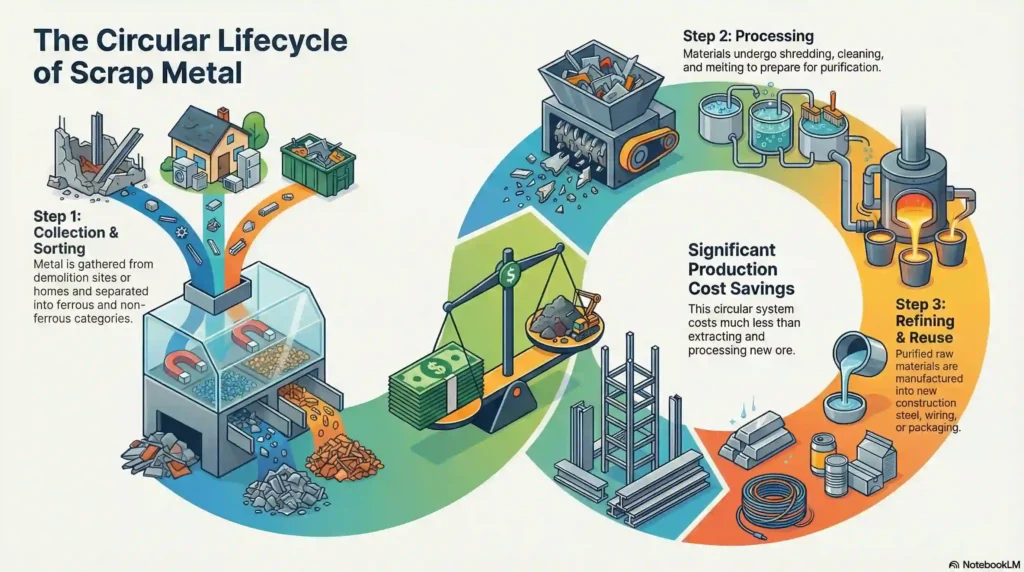
- Collection or Drop-Off – Scrap metal collected from homes, sites, or industrial sources.
- Sorting – Separation into ferrous and non-ferrous categories.
- Processing – Shredding, cutting, or baling.
- Melting & Refining – Converted into raw material.
- Reuse – Reintroduced into manufacturing (wiring, structural steel, packaging, etc.).
Most scrap metals in NSW are fully recyclable, making recycling scrap metal one of the most efficient waste recovery streams available.
Scrap Metal in Construction & Hard Waste
Construction and demolition projects generate significant volumes of scrap metal, including steel framing, rebar, roofing sheets, pipes, wiring, and aluminium fixtures. Separating metal scrap at the source improves recycling rates, protects scrap metal value, and reduces landfill waste.
Clean loads achieve better scrap metal rates and support NSW sustainability targets. For more details, see our guide on building waste recycling and learn how councils manage bulk materials through hard refuse collection.
Related Services in NSW
For those seeking structured scrap metal collection or specialised waste handling support, the following resources provide further information:
These services are available through RubbishGo across Newcastle, Lake Macquarie, and the Central Coast.