


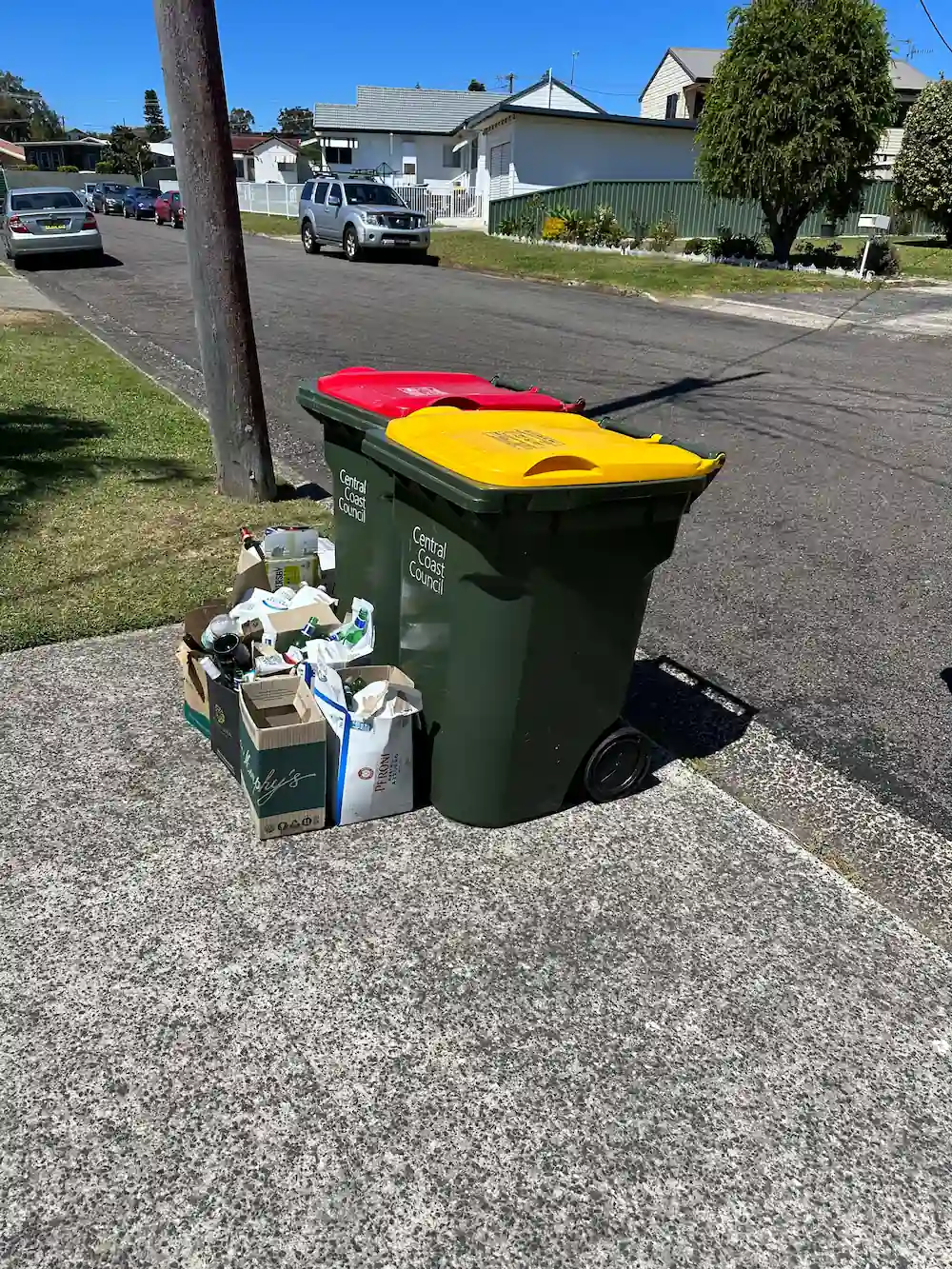
Why Waste Separation Matters
Incorrectly sorted rubbish can contaminate entire recycling loads and send valuable materials straight to landfill. Proper waste separation — also known as waste sorting — keeps recyclables usable, improves compost quality, and protects waste management workers.
More importantly, effective waste classification supports a circular economy, where materials are reused, recycled, and kept in circulation rather than wasted.
Waste and Types of Waste: The Four Core Categories
According to standard waste classifications, most household waste falls into four main groups. Understanding this classification of waste makes everyday sorting far easier.
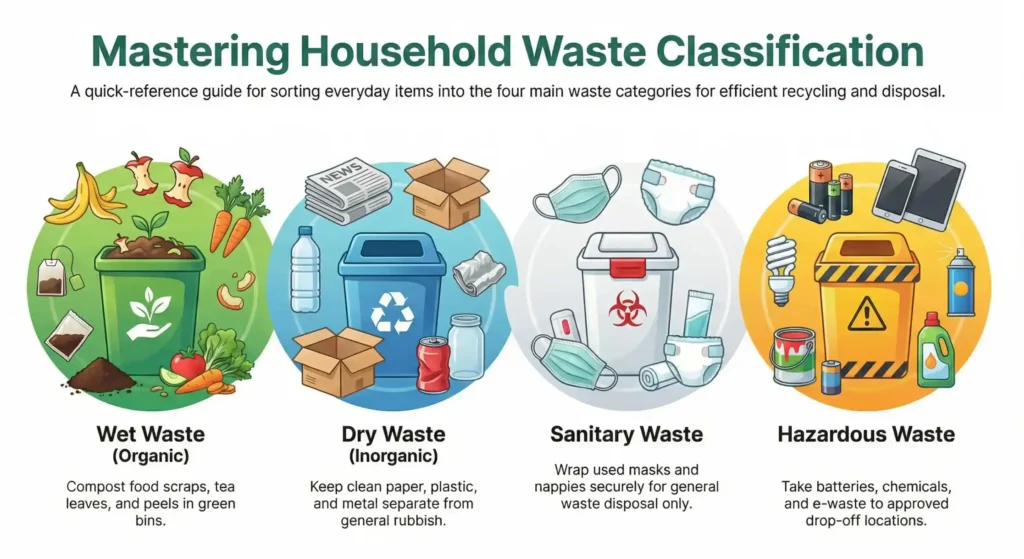
| Waste Type | Examples | How to Handle It |
| Wet Waste (Organic / Biodegradable) | Food scraps, vegetable peels, tea leaves, egg shells | Use a home waste bin or compost bin. Wet waste can be turned into nutrient-rich compost for your garden. |
| Dry Waste (Inorganic / Non-biodegradable) | Paper, plastic, glass, cardboard, metal cans | Keep it clean and dry. Sort waste into recyclables (send to recycling) and non-recyclables (dispose as general waste). |
| Sanitary Waste | Used masks, nappies, bandages, sanitary pads | Wrap in paper, mark with a red cross, and dispose of in general waste. Don’t mix with recyclables. |
| Hazardous Waste | Batteries, e-waste, chemicals, expired medicines | Store safely and take to your local hazardous waste drop-off point. Never place in your home waste bin. |
For a deeper breakdown of household waste and how it should be sorted for recycling, see our detailed guide.
How to Separate Waste at Home: A Simple Guide
Creating a practical system at home doesn’t have to be complicated. These simple trash separation tips for small homes (beginner guide: wet and dry waste) make it easy to stay consistent.
1. Use Clearly Labelled Bins
Start with basic bin sorting:
- Green bin: wet waste (organic waste)
- Yellow bin: dry recyclables
- Red bin: general waste
If space allows, keep a small container for hazardous and electronic waste.
NSW households can follow the green waste bin guide to understand which materials are allowed and which items are prohibited.
2. Keep Recyclables Clean and Dry
Rinse plastic bottles, jars, and cans before placing them in the recycling bin. Wet paper or food-stained materials can ruin an entire batch of sorted rubbish.
💡One of the most common types of household waste is plastic items, from bottles and containers to packaging. To make recycling easier and more effective, check this Plastic Recycling Ultimate Guide.
3. Compost Organic Waste
Composting is one of the most effective ways to manage wet waste. Even small households can use compact compost bins to turn food scraps into garden fertiliser.
💡A practical compost guide can help you understand how to manage kitchen scraps and create healthy compost at home.
4. Handle Hazardous and Sanitary Waste Safely
Hazardous items should always be kept separate from general waste and recyclables. Follow your local council’s waste classification guidelines for safe disposal days.
💡Electronic waste is one of the fastest-growing waste classifications in Australia. Learn how to dispose of it safely in the e-waste recycling and disposal guide
5. Reduce and Reuse First
The most sustainable waste is the waste you never create. Reduce packaging, reuse containers, avoid single-use plastics, and choose durable products whenever possible.
Common Mistakes in Sorting the Waste
❌ Mixing Wet and Dry Waste
This contaminates recyclables and prevents composting.
❌ Throwing Hazardous Waste in General Rubbish
Batteries and chemicals can leak toxins into soil and waterways.
❌ Ignoring local waste classification rules
Recycling guidelines vary by council — always check local requirements.
❌ Poor compost management
Compost piles need airflow. Turn them regularly to avoid methane build-up.
Many households still misunderstand the basics of waste separation. The video below explains how common mistakes can disrupt the recycling process.
Getting Started: Build a Sustainable Routine
If you’re new to waste segregation, start simple and build habits gradually:
- Observe your household waste for one week.
- Set up bins for wet, dry, and general waste.
- Teach everyone at home the basics of waste classification.
- Schedule regular drop-offs for recyclables and e-waste.
- Track progress — less rubbish in your red bin means success.
When You Have Too Much Waste
If some of your household waste is bulky, or you simply have more than usual, you don’t have to worry. You can schedule regular monthly waste collection Services with us, so your home stays clutter-free without any stress.
Even if your rubbish piles up or includes large, awkward items, we can help you manage it effortlessly. Our team will collect, transport, and deliver your waste to recycling centres or secure disposal facilities, leaving you free to enjoy a clean, organised home.
The Benefits of Proper Waste Segregation
Following clear waste classification guidelines helps households:
- Reduce landfill pressure
- Conserve natural resources
- Maintain a cleaner, healthier home
- Support recycling industries and local jobs
According to global data from the World Bank, improved waste sorting and recycling systems play a key role in reducing environmental damage worldwide.
Final Thoughts: Small Actions, Big Change
Waste separation might feel like a small daily habit, but its impact is huge. Every household that follows proper waste classification contributes to a cleaner environment and a more sustainable Australia.
By applying consistent waste classifications, using the right bins, and keeping systems simple, you’re not just managing rubbish — you’re creating lasting change.